
 Aarif Deen
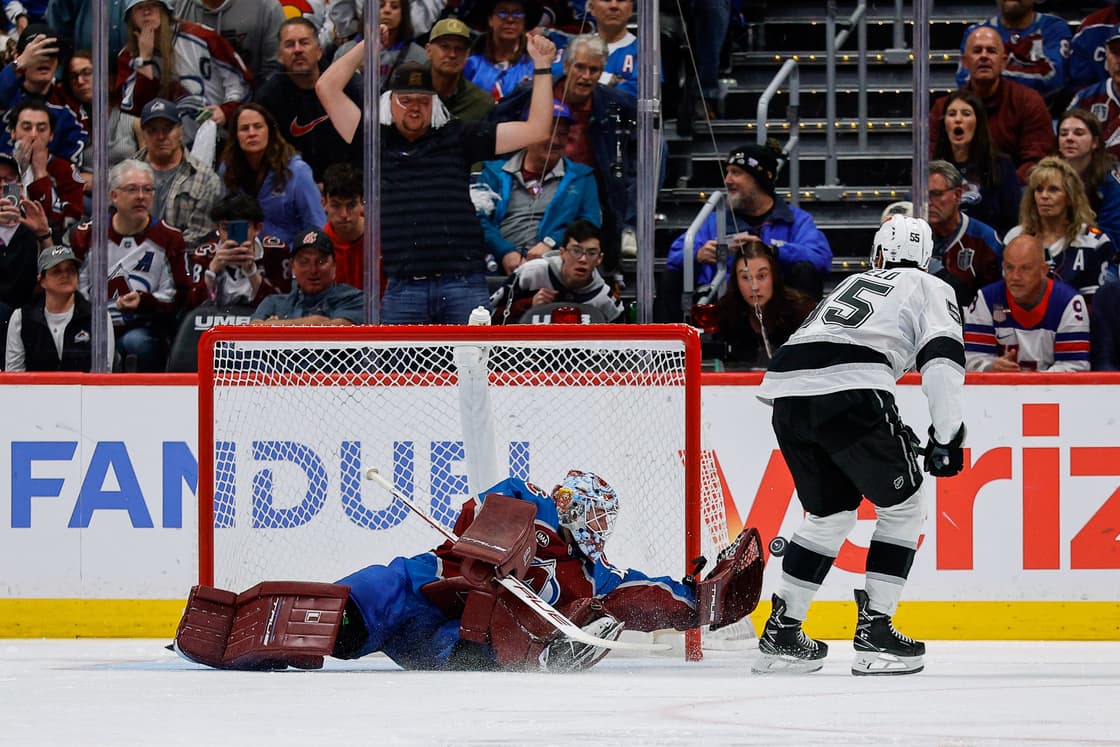
It took four games for the Colorado Avalanche to get past the Los Angeles Kings in the opening round of the 2026 Stanley Cup Playoffs.
On one hand, this should’ve been the result all along. The Avalanche finished the 2025-26 regular season with a league-high 55 wins and a franchise-most 121 points. Meanwhile, Los Angeles limped into the postseason as the No. 8 seed in the Western Conference with just 90 points. The Kings won a staggeringly low 35 games and had a whopping 20 overtime/shootout losses to pad their place in the standings. They were the 20th-ranked team overall.
There was no scenario where the Kings could’ve won this series outside of an outrageously historic upset. They couldn’t do it — they didn’t even win a game.
Here are the three biggest reasons why that was.
The Avalanche are heading to the second round! Please consider donating to the Colorado Hockey Now Playoff Travel Fund via PAYPAL BY CLICKING HERE or VENMO BY CLICKING HERE to help our beat writer continue to provide road coverage during a must-see second-round series.
Scott Wedgewood
For as talented a team as the Avalanche are, the goaltending performance of Scott Wedgewood was a key factor in their first-round sweep. Especially in the first two games.
In Game 1, Colorado didn’t open the scoring until late in the second period. Up until that point, both Wedgewood and opposing goalie Anton Forsberg had to make huge saves to keep their teams in the fight. That game was tied or within a goal nearly the entire way.
He was even more of a factor in the following game. The Avs and Kings both struggled to solve the opposing goalie for the majority of regulation before Artemi Panarin scored a power-play goal to put the Los Angeles Kings up 1-0. It took only 3:21 for Gabe Landeskog to respond, and Wedgewood had to do his part the rest of the way, and into overtime, to keep the Avs from giving away a game.
Game 3 saw more big saves from Wedgewood, and he was key in Game 4 to help weather an early storm from the Kings.
Not bad for a guy making his first four career playoff starts.
Spreading The Wealth
Fourteen of the Avalanche’s 20 skaters who took part in this series recorded at least a point on their 13 goals. Of the six who didn’t, three of them played two or fewer games (Joel Kiviranta, Ross Colton, and Nick Blankenburg).
The other three were Brent Burns, Parker Kelly, and Valeri Nichushkin.
Colorado is committed to defending in this series and decided it was best not to cheat for offense. The Kings’ entire game plan was to hammer the Avalanche, throw hits at every opportunity, and try to be opportunistic in limited scoring opportunities. The Avalanche’s commitment to defending ensured that wouldn’t happen.
To help make that a reality, head coach Jared Bednar did an excellent job spreading the ice time across the lineup. Nathan MacKinnon, who often leads forwards in ice time, played fewer than 20 minutes in each of the last two games. He led the Avs forwards with just 17:37 in Game 4, which was less than five minutes more than the 12:41 Kelly played to finish with the least.
MacKinnon averaged only 20:39 in the first round and no other forward reached 19 minutes.
Team Defense
That leads us to this. The factor that helped the Avs get through the first round with ease was their ability to flex on the Los Angeles Kings that, despite the Kings’ reputation to play strong defensively, Colorado could do it better.
Even if the Avalanche are seen as an offensive powerhouse, they are still the team that gave up the least number of goals in the regular season. They can win games by scoring a lot, or they can win games by shutting down the opposition. Against the Kings, they did the latter. And they did it well. Colorado trailed for only 3:21 in the entire series.
The PK, despite giving up three goals, was excellent. They even scored a shorthanded game-winning goal in the process.