CHN+
How Miles Wood Earned The Staff’s Trust To Kill Penalties (+)
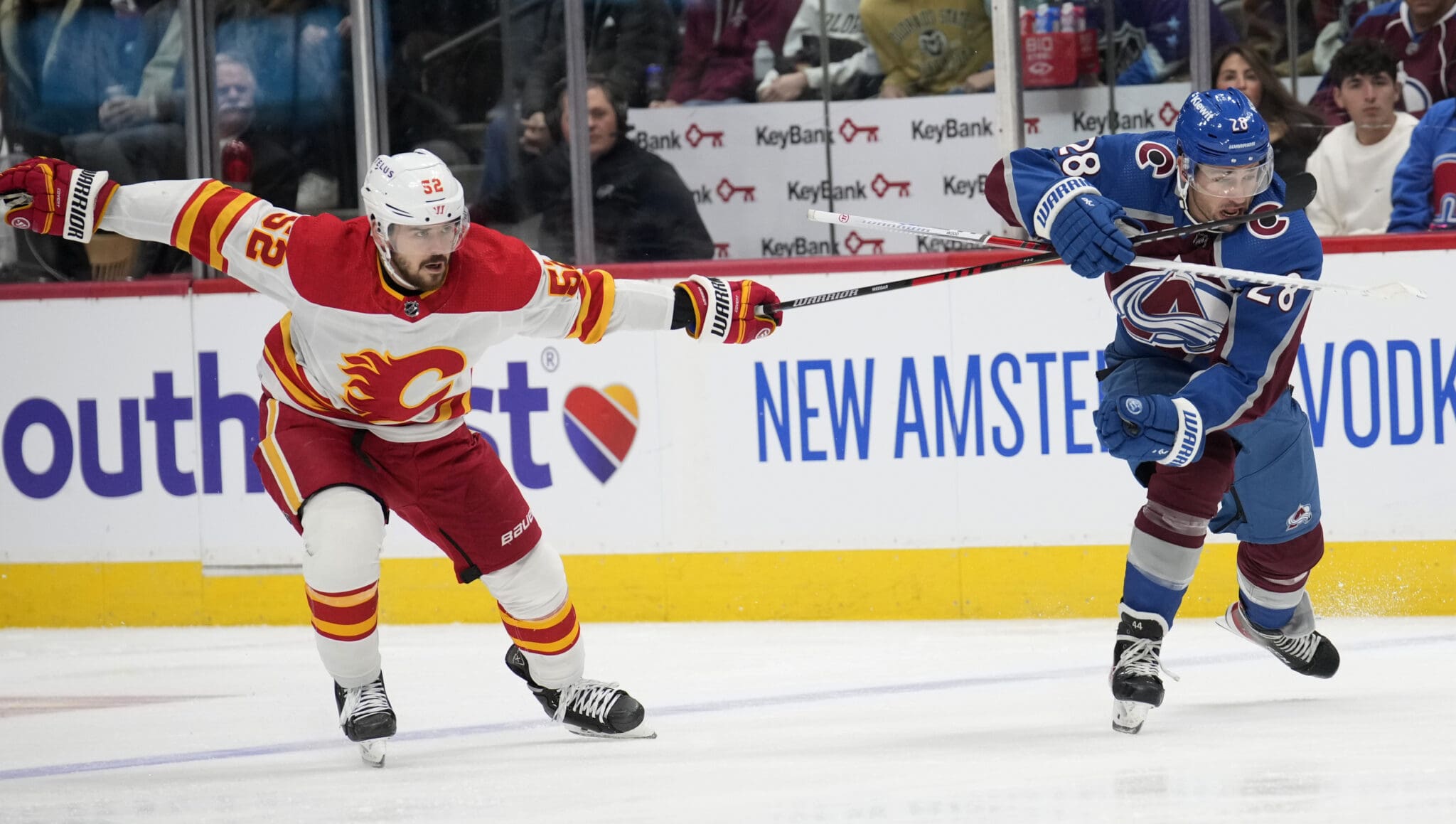
When the Colorado Avalanche gave Miles Wood six years back on July 1, a lot of people were taken aback.
Six years for a bottom six forward who doesn’t play special teams? That’s a big commitment.
As it turns out, the Avalanche had plans to try Wood on the penalty kill all along, and get a little more value from the deal, but that was far from a slam dunk. While Wood had the skillset of a solid penalty killer, he had essentially no experience at the NHL level doing it.
Early on, it didn’t look good.
“Coming in, watching him early, we were like, ‘uhhh, you know, he’s got some work to do,'” Jared Bednar said with a chuckle.
Luckily for the Avalanche, he’s been a quick study.

With Wood on the ice, the penalty kill has been tremendous. Granted, the unit has been great all year long, no matter who is out there, but the numbers look especially strong during Wood’s ice-time. In his nearly 26 minutes of shorthanded time, the opposing team has only managed to score once. Wood has countered that with a shorthanded goal of his own, so he’s technically broken even.
Here’s a chart that showcases what it looks like when he’s out there. Essentially, the purple is good, so when he’s out there, the puck is generally staying away from the center of the ice, and the Avalanche are allowing 2% goals per-hour less than the league average rate with Wood killing penalties.

Not bad.
“I think the practice time has really helped him, and he’s been really good here,” Bednar said of Wood. “He’s making reads all over the ice that Cogs and OC do, kind of instinctually. He’s a big part of our penalty kill.”
Logan O’Connor, the unofficial leader of the penalty kill up front, says he hesitated his first year or two playing the penalty kill in the NHL. Only in the last year or so did he start to trust his ability a little bit more.
That’s why he’s so impressed with what Wood has done.
“You’ve seen his speed take over,” O’Connor said of Wood. “On our PK, you try to get guys to trust their instincts. He’s a guy that, you’ve seen his progression from the start of the year in practice, learning things, trying to be a student of the PK a little bit, to where he is now, he’s definitely comfortable and you’re seeing the impact he’s had.”
While Bednar said it was a little rough at the start, Wood said the move to the penalty kill hasn’t been too difficult.
“It’s pretty easy structure,” Wood told me. “(Pratt) has been great with me, helping me with the reads and stuff, so it’s been good.”
Nolan Pratt is the assistant coach for the Avalanche, and he’s been running the penalty kill since he arrived in Denver prior to the 2016/17 season.
During Pratt’s tenure, the highest the PK for Colorado has ever finished is 4th in the NHL. That was way back in 2017/18.
4th is where the PK currently sits, so they’re off to an incredible start. They’re getting a lot of practice, too.
“It’s good for us,” Wood said. “Unfortunately, we take a lot of penalties, so we have to kill a lot, but I think it’s been great so far, we’ve just got to continue to build.”
As media, we see practice every day, and as a player, Colorado’s penalty killers get to go up against the likes of Nathan MacKinnon, Cale Makar, and Mikko Rantanen to hone their skills. You likely won’t find a more skilled trio than those guys, so you’re up against the best. Everyone else sees the games, where the Avalanche have been incredible.
What goes on behind the scenes? For one, Wood shares a stall with veteran Andrew Cogliano, who has been “great” to him since he arrived in Denver. Beyond that, the penalty killing unit is always meeting.
“We meet once a day,” Wood said. “We scout the opposing team a lot, so there is a lot of behind the scenes things on what we’re doing.”
Wood says it’s been an easy adjustment, but he’s the one that put in the work. And it’s that work that has earned him those extra minutes, time he didn’t get with the Devils.
“Just having that deep desire to want that ice time and wanting to kill is part of it,” Bednar said. “Then, doing the work with the video, and in practice to listen to (Pratt) and fine tune all the things.”
That work did not go unnoticed.
“(Pratt) eventually came to me and said, ‘I feel really comfortable with Woody going out there and doing the job in the game,’ so that’s what we’ve been doing.”