
 Adrian Dater
I want to just start writing some more personal stuff on the site. Nothing heavy, just some occasional bloggy, diary, off-the-top-my-head stuff. I want you to feel like you know the guy behind the byline, but really I don’t want it to be all about me. Just me talking about stuff, which may include some personal stories from the past or riffing a bit more on the events of the day. Nothing political – I’m not going to start being one of those tiring sports writers who fills his/her workplace platform with political beliefs.
I want to talk about my start in the journalism business, and how different it is from today, and try to apply it to the younger folk in here reading this, who are curious about how to do this for a living.
I just want to tell a couple of brief tales from those early days for me. I know there are a lot of you out there who want to be in the sports media business. I’m not here to tell you it can’t be done, because I did it. And like that old saying goes, if I could do it, anyone can.
I worked at the Concord (N.H.) Monitor newspaper, from fall of 1988 to spring of 1991. I was the paper’s “pre-press proofreader”, which meant my job was to read all of the paper’s advertisements to make sure they were spelled correctly and also looked the way they were drawn up on the “dummy” sheets (size, specifications, font sizes, font types, etc.).
I made $6 per hour when I was hired. By the time I left, I was making $6.51. It was a full-time job, with medical and dental. I lived with my folks, in the basement (now you know why I’ve never truly made fun of the “blogger in the basement” guy).
Part of me regrets ever doing that job, especially for as long as I did. I was just out of college. A bunch of my best buddies from high school did stuff like go to the South of France for a few months out of college, having the time of their lives on a rented house on the beach. I should have done that too. But I thought I had to be the guy on the right “track”, who checked all the boxes of what I was supposed to do, career-wise.
What I don’t regret are many of the people I got to know. I knew everybody from the whole paper – not just the greasy, ink-stained “backshop” people like me, but most of the staff writers and editors. I learned a ton from all them, about what it was like to put out a daily newspaper, with much of the work still done with glue pots and bulky typesetting equipment and printing presses that rumbled with the joyous sounds of the outlay of all our collective hard work.
I might be romanticizing this a bit too much here, because I remember plenty of days where I couldn’t stand the job or some of my co-workers or bosses. But I think I’m a person who, usually, prefers to remember the good memories, not the bad, so my good memories of working at the Monitor include some of the pre-press people – especially three old guys named Dale, Mike and “Smitty”. I think, and I’m not making this up, by the time I worked there, they all had put in at least 30 years at the paper already.
Dale and Mike were “ad builders”, who looked at the specs of a particular ad and literally glued it all together on a piece of thick, stock paper, slapped it back into a plastic folder and dropped it on my desk for a final go-over for spelling and whatnot. They were always working with exacto knives and thin little strips of sticky black borderline tape to form the ads around.
Dale was the outgoing one of the three, his deep, baritone voice filling the large room full of incline work desks. Dale, tallish and wiry, wore plaid shirts and nondescript, Dickies-type work slacks. He was mostly always happy-go-lucky in demeanor, always having time for a good, bawdy joke and a punch in the shoulder.
Mike worked at the desk next to Dale, and was stop No. 2, in the pre-press shop, on the ad’s way circuitous route from concept to printed in the actual paper. Mike was quieter, grumblier and old-school in every possible way. But I loved hanging around him. Mike wore black shoes and white socks and a simple shirt with a white undershirt and button-up sweater, every single day. His favorite thing to say, always, was “OK, I’ll go home then” whenever something couldn’t be done or some kind of issue came up with an ad or pretty much anything happened. And, every single time, I always laughed at it, even after the 300th time I’d heard it that month.
Smitty was the pre-press typesetter, a very tedious yet very important job. His job was not only to type many of the advertising copy that would be seen visually, but he typed most all of the headlines for the news stories of the paper. Myron was probably 75 or so when I was there, crusty as an old yellow school bus. He wasn’t much of a talker, but he liked to occasionally dabble in office gossip, sometimes coming up to Dale, Mike and Me with some kind of whispery, dark, cynical rip job of some superior or fussy co-worker.
“He/she clocked in five minutes late, but you watch, it won’t matter. He/she’s the little teacher’s pet right now!” (Yes, we clocked in, with timecards and everything).
Smitty liked me because I showed interest in what he was doing, in his more solitary desk, off to a side of the room so he wouldn’t be distracted from typing all those headlines. He even let me type some of the “heds”, which I considered a huge honor. I knew the ones I typed, so the next day in the paper I’d look at them and say “I did that!”
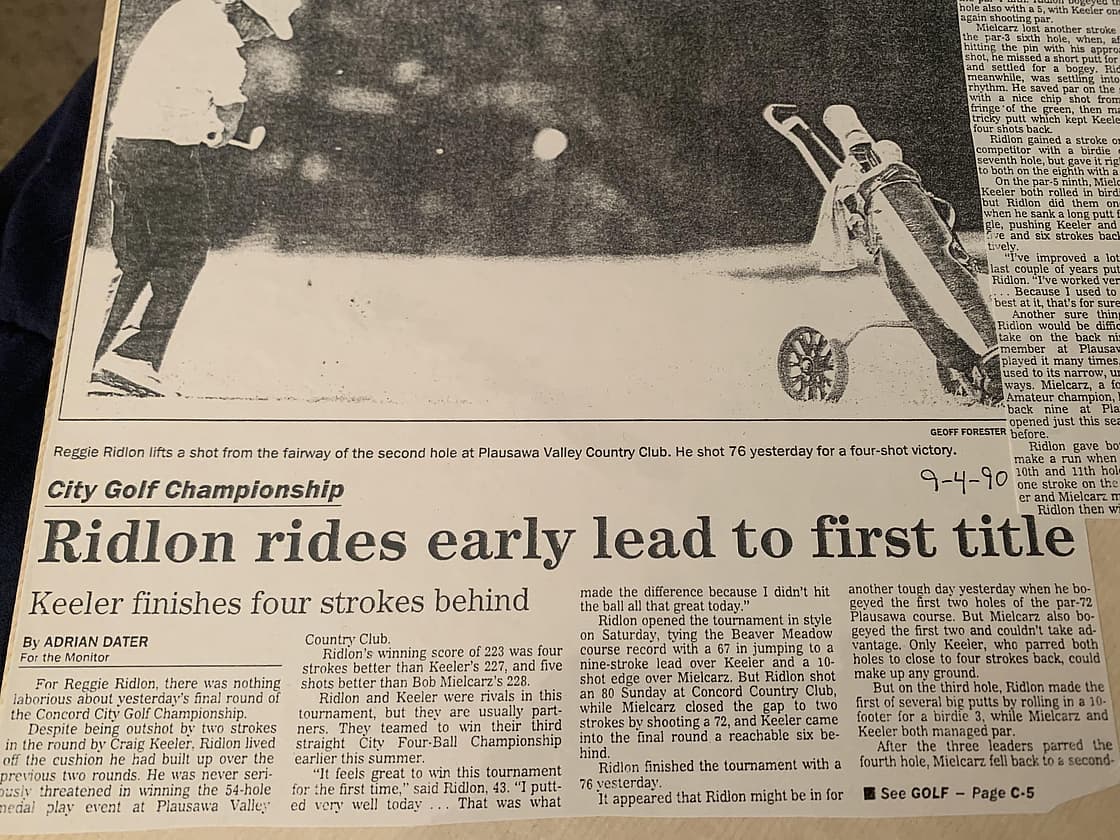
I wanted to be in the more glamorous side of the paper, which meant in the newsroom – specifically the sports department. Toward the end of my stay there, I did get the chance to do some writing (see the story above), and it was great, the thrill of a lifetime.
But I remember those three guys – and several others I haven’t mentioned – so fondly. They never, ever called in sick. They always showed up on time for work. They took real pride in their work, even if they didn’t get their names in the paper. Those are the kinds of guys who would pop into my mind whenever I started whining too much as a sports writer for much “bigger” places later on, whining when my flight was late or the free press room chow wasn’t five-star.
“STFU Dater. Guys like Dale, Mike and Smitty would be embarrassed for you right now.”
It was great for me to be able to see that. I still was considered pretty young to have gotten the start that I did as a sports writer at the Denver Post, but I did have some dues-paying years in the business that most people don’t know about.
And that’s moral of this story: to all the kids out there who want to be well-read, well-known sports writers or “personalities”, just know that most everyone has to pay their dues. Don’t get too discouraged if it doesn’t happen right away. And, try to learn and make the most of any work situation you’re in. Look to those Dales and Smittys and MIkes of the world, people who do good, honest work and just go about their business.
You’ll probably learn a lot more than you ever realized you might, even more than from the supposed “bigshots.”